
Learning, Classrooms & Labs
Prior to joining the RAF, potential apprentices had to sit entry examinations in MATHS, SCIENCE and ENGLISH & GENERAL subjects. Would YOU qualify today?
The purpose of the aircraft apprenticeship was to train young men to become highly-skilled radio and radar fitters who would service and maintain the sophisticated electronic equipment operated by the Royal Air Force.
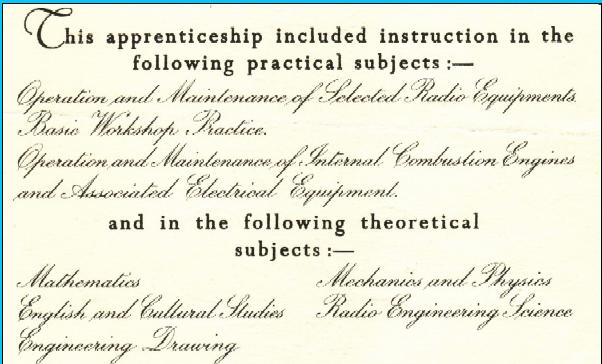
Practical Subjects included Basic workshop practice plus Operation and Maintenance of selected radio equipments, internal combustion engines and associated electrical equipment. Theoretical Subjects included Mathematics, Mechanics and Physics, Radio Engineering Science, Engineering Drawing and English and Cultural Studies.
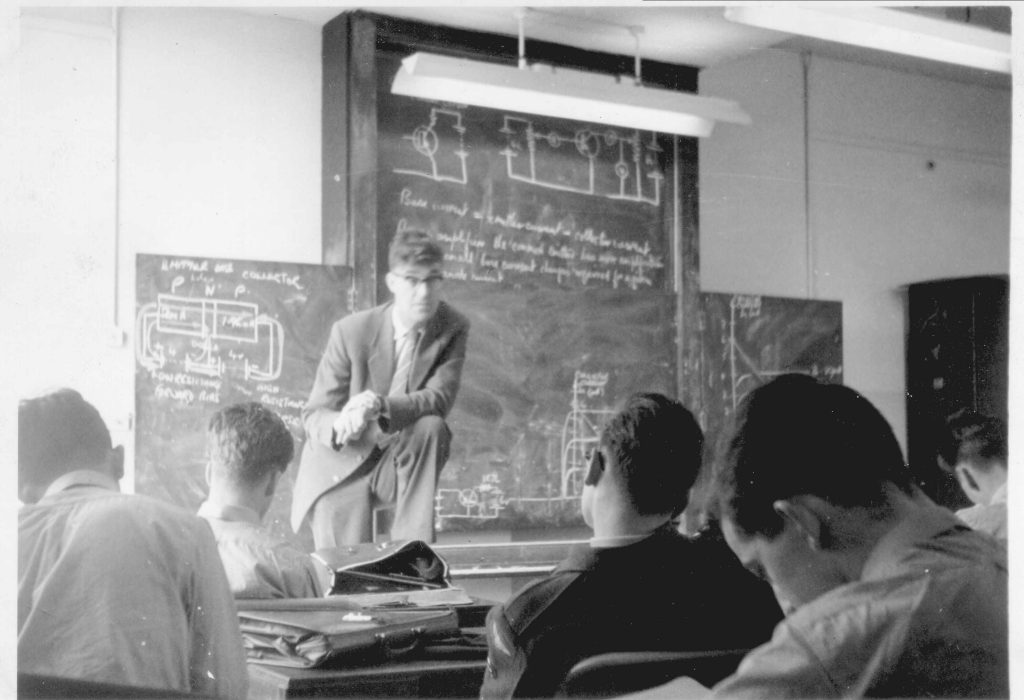
The first year of training involved detailed studies of basic electrical and electronic theory, ranging from valves and transistors to magnetrons and waveguides. Regular exams ensured that we paid attention and before long we were becoming little “egg heads”. But it was not all classroom theory. There were very modern (for those days) laboratories and workshops where theory could be put into practice and the subject of electronics and electricity was becoming less of a mystery.
In the second year, our studies began to focus on specific areas of RAF electronics and the entry began to split up into areas of expertise such as ground wireless/radar installations or airborne radar systems.
The third year saw us in our final trade groups. Click on a group for details…. A full list of the 100th Entry trades is shown HERE.
A selection of photos appears on this page. To see all photos in this category, go to the photo gallery.
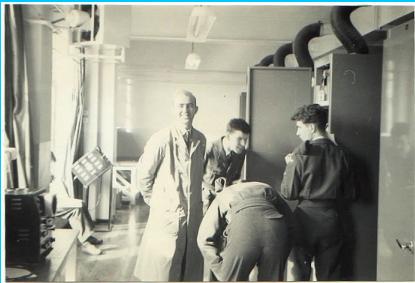
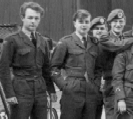
In the laboratory – CT Woods, Pete McNaught, Bill Ranson
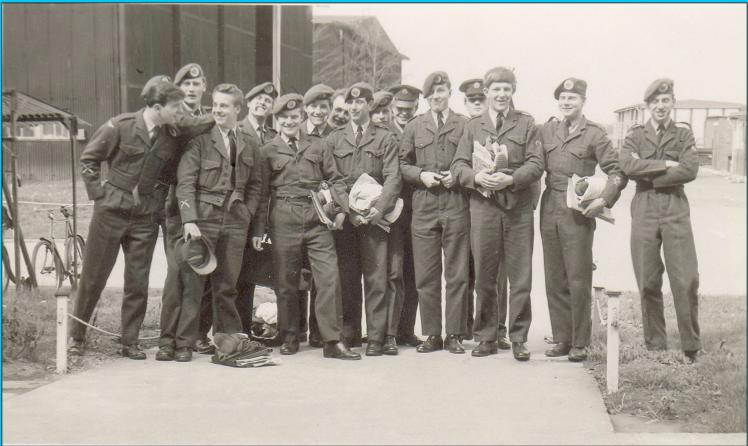
Between classes – Doug Graham, Mick Woody Woodward, Ian Quarrie, Brian Kinge, Bill Curtis, Colin Hogg, Laurie Dunlop, Jack Hawkins, Tony Muncaster, Ron Regan, Tom Gerken, Paddy Allen, Mick Povey, Ray Smith, Mick Mike Lyon
During the training, ‘mock’ exams like the one below were taken to monitor progress and famililiarise students with with the type of questions to expect in the REAL exam.
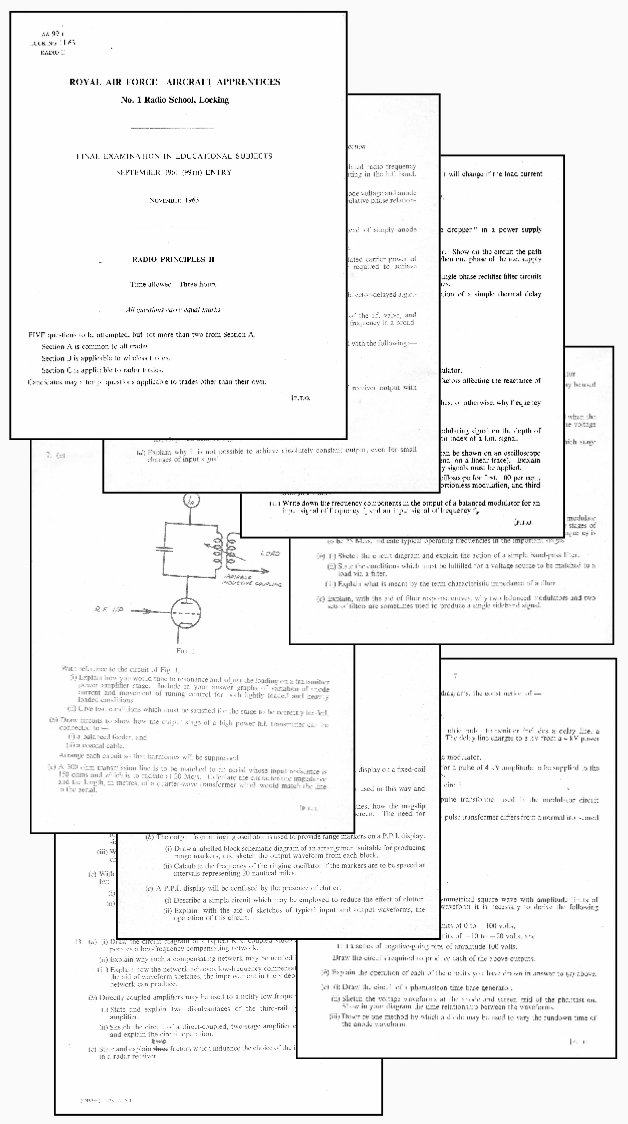
Practical exams involved fault-finding (troubleshooting) on complex electronic equipments where a componenent had been replaced with a dud item. It wasn’t always necessary to actually FIND the fault in the specified time, but to demonstrate the logic behind your actions.
AIR RADAR · GROUND RADAR · GROUND WIRELESS
At the end of the 3 years, successful apprentices received a certificate detailing the subjects taken.
Another aspect of training was ‘air experience’.
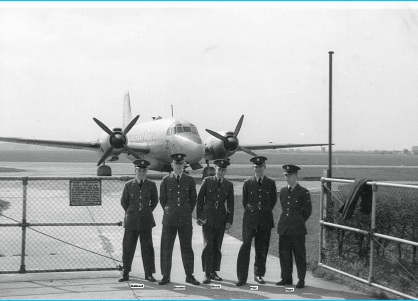
Many apprentices went up in a twin engined Vickers Varsity (right), and some flew in an Avro Anson. There was also a Vickers Valetta but this was not available to the 100th. Standard equipment that had to be worn included wear lifejacket, parachute-harness and WW2-headset. Some memories are posted on the 100th Entry Forum.

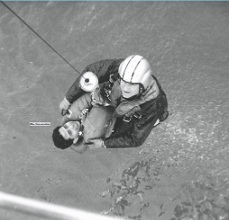
To complement air experience, there was a need for ‘survival training’ which included air sea rescue at RAF Chivenor in Devon.
More Learning Photographs